Art, Rhythm, and Refinement: New York's Modern Take on Vintage Opulence

Long standing the center for style, culture, and innovation, New York City upholds an aura of grandeur that carries early 20th-century elegance and merges it with contemporary creativity, extensively drawing from the free-flowing lines characteristic of Art Nouveau superbly applied on rich material in quite ornamental detail. A variety of the arts, fashion, music, and technology are used in the construction of these spaces so as to render them fully immersive.

In other words, these spaces become performative in their very visual existence; from the furniture to the lighting, every element in the art installation or venue contributes to shaping a somewhat sensory narrative. With these spaces, guests become enmeshed, early on, in the dynamic interplay of rhythm, texture, and sound. With this blend of historic styles and present trends, these venues, therefore, are giving their 21st-century definition to luxury: experiential, personal, and building on cultural energy flowing freely in the city.

A Revival of Art Nouveau in Modern Spaces
Art Nouveau Revival

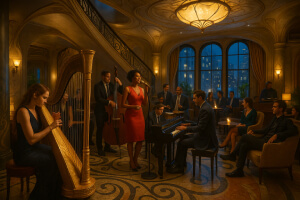
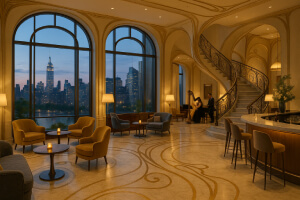
Art Nouveau, with its curving lines of nature, leaves an eternal unpredictability in the world of New York-based luxury projects. Designers nowadays do draw on this legacy, however, not simply to adorn a piece but rather as a storytelling medium. Marble floors spin inlaid-brass patterns; ceilings glint with hand-painted designs; staircases are nearly sculpted into art-image-theatre, plus-function.

In hotels and residences, locally moving scenery is combined with modern conveniences and technology, while soul lighting enriches architectural flourishes by shifting ambient lighting from hour to hour. The fabrics used are wonderfully cunning to the touch-from velvet-nursed armchairs to silk-draped curtains: a deliciously tactile sensation that complements the visual extravagance. Designers also insert sculptural furniture that picks up the Art Nouveau curves, thus making the functional pieces an integral part of the overall design story, rather than an afterthought. Old-world charm paired with contemporary innovation bestows upon the spaces an everlasting elegance that is nostalgically forward-looking.
Music, Rhythm, and Sensory Storytelling

Music and Rhythm

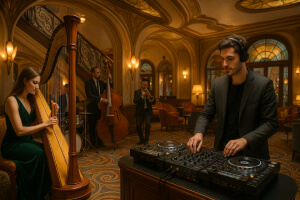
The city's nonplusally-striking hotels and luxury lounges create a heterogeneous scene where music and rhythm are intrinsically woven into the weaving of the guest experience. Live performances are held from communicating with the environment; from jazz quartets to electronic DJs turn architectural features into instruments of perception. A harpist could echo the curves of an Art Nouveau staircase, or a DJ could randomly control the energy flow from one lounge to another.

Sound design-a truly intangible art-also goes beyond scheduled concerts and performances. Acoustics are created to interact with natural tones, and playlists are selected for seasonal appropriateness and thematic storytelling in any venue. Customers see music not just as entertainment but also as a complementary layer to the visual and tactile environment. Lighting, scent, and subtle temperature changes-given the degree of intimacy, excitement, and relaxation-will along with sound lead guests through an entire journey. New York style and energy change a night out into an unforgettable multidimensional experience.

Fashion and Material Luxury

Fashion and materiality define the very identity of these spaces. Interiors showcase fabrics, metals, and woods echoing the glamour of 1920s salons, with contemporary design ensuring contemporary durability and adaptability. Furniture upholstery and treatments for walls collaborate with fashion houses, thus bringing runway sensibility into architectural design.

Materials are as much about sensory qualities as they are about looks. Velvet begs for a touch, polished marble for light to reflect off its interface latitudinally, and aged brass for a warmth that modern metals cannot bear to juxtapose. Designers revel in layering textures, juxtaposing smooth lacquered textures with rough textures of embroidered panels. This verve in the detailing of material ensures that the perception of luxury is enhanced, making everything in an environment feel intentional and crafted. The guest becomes profoundly aware of the space, not merely as architecture-to-be, but as an actual living and breathing canvas of refinement.

Experiential Living and Hospitality

Hospitality

And yet, here the residential projects continue to pursue their philosophy of immersive luxury. Art Nouveau-like detailings for glistering apartments and penthouses are intertwined with smart-home technology. Boasting floor-to-ceiling windows showing the city as living art, the insides comprise furniture, lighting, and art grounded in a critical understanding of taste and theme.

This hospitality aspect is taken one step further in hotels, which can offer personalized experiences alternating with hospitality and storytelling. Private salons host intimate performances; mixology bars serve cocktails that are artistic and gustatory experiences; their concierge serves you with cultural itineraries reflecting the city's beat. Interweaving architecture, design, and experience; these establishments transform how one just stays around into moments of artistic and sensory appreciation.

Social Spaces as Cultural Hubs

Social Spaces

The new generation of luxury New York spaces are designed as social catalysts. The lounges, bars, and multi-function halls open up space for the exchange of culture, networking, and celebrations. Art installations change in accordance with exhibitions by local artists, creating a dialogue between residents, visitors, and the city.

The social spaces allow for interaction with the elegance intact. Seating arrangements promote conversation while maintaining a degree of privacy; ambient music sets the mood, while at theater-like lighting draws attention toward critical design elements. It is a theatrical gathering where the cultural identity of this city meets contemporary social life. This balance, in fact, appeals to connoisseurs from the City and international travelers looking for a more layered New York experience.

Sustainability and Thoughtful Design

Historically imbued with maximum splendor, some of these projects yet go toward sustainability. Natural and recycled elements are used, energy-efficient lighting installations are installed, and climate-conscious building procedures are carried out so as not to compromise the aesthetics. Designers have largely become aware that luxury today cannot turn a blind eye to environmental conservation. An amalgamation of responsible design and intentional extravagance makes these spaces worthy of being called into existence both morally and tangibly through the lens of traditional artisanal craft.

Art, Rhythm, and Refined Living

New York modern luxury steps out with Art Nouveau design, materials of rich nature, live music, and fashion into a fully immersive sensory experience. These spaces make stays and visits the curated journey, soaking up the city's energies but channeling them in honor of history. Guests are treated to a vision of luxury that is both refined and contemporary and respects heritage as well as the dynamic cultural pulse of New York.